PRODUCT SUITE
Delphis
Advanced Underwater Acoustic Communication
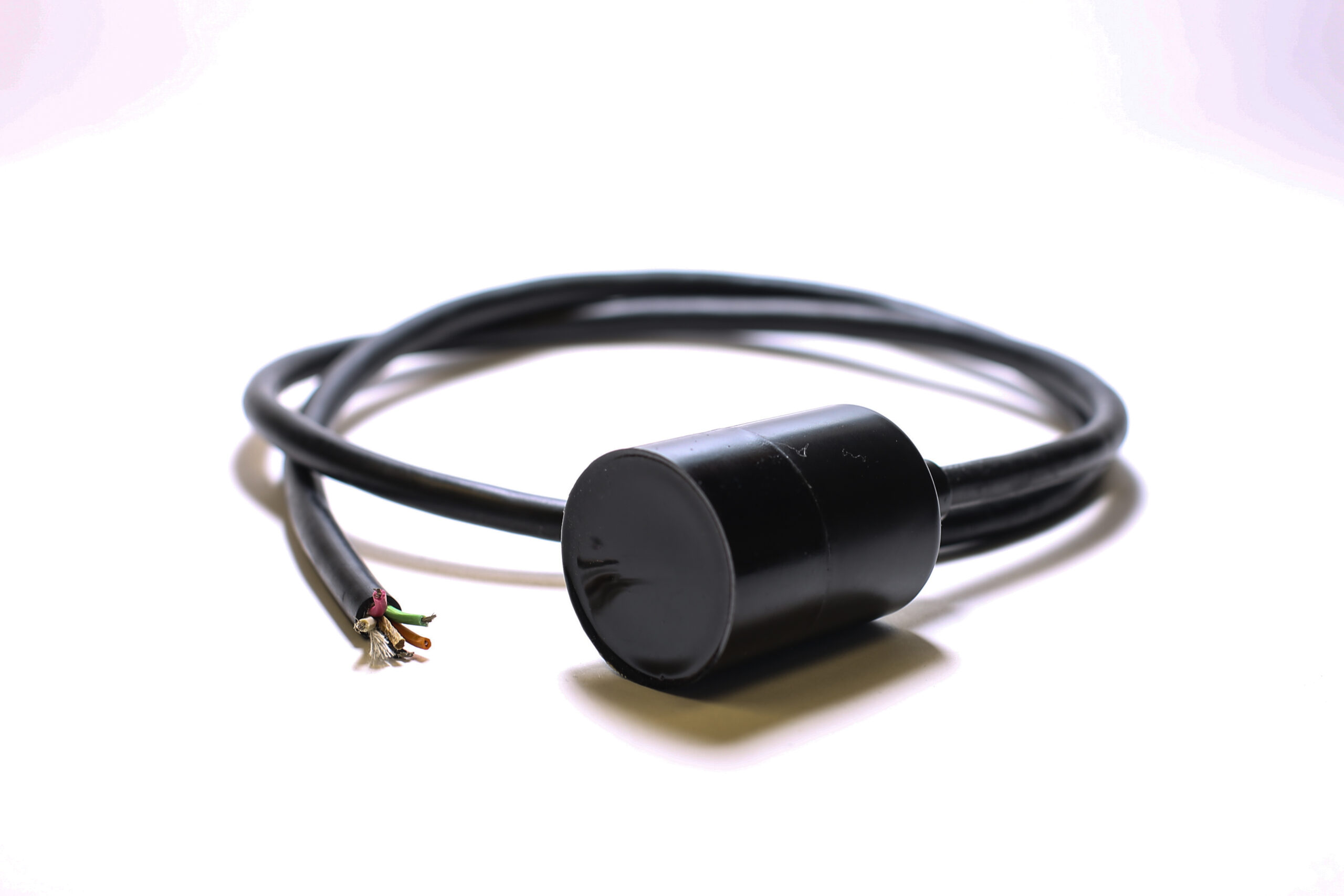
Overall, the Delphis is a revolutionary underwater acoustic communication device that allows for advanced communication between underwater vehicles, divers, and subsea instruments.
High-Performance Acoustic Modem and Transponder
In addition, developed by Succorfish in collaboration with Newcastle University School of Electrical and Electronic Engineering, this miniature acoustic modem and transponder is used by research institutes worldwide for a variety of underwater applications.
Reliable Data Exchange in Subsea Environments
As a result, with the Succorfish Delphis, users can exchange packets of up to 64 bytes between 256 uniquely addressable units using short burst acoustic waves, making it a highly effective communication solution.
Furthermore, this underwater acoustic communication device uses minimal power and integrates easily with embedded systems.
Simple Integration with Embedded Systems
The device has a compact, low-power design. It supports control via a simple RS232 serial command protocol or a logic-level UART interface (2.5V/3.3V). Consequently, its low power operation supports long-life deployments, making it an ideal building block for Internet of Underwater Things (IoUT) applications. In addition, the simple serial communication protocol enables easy integration with microprocessors.
Improved Signal Performance and System Protection
Furthermore, the latest hardware revision features reduced receiver self-noise, which increases the signal to noise ratio (SNR) and range in low to moderate sea states. The Delphis protects the power supply input against reverse polarity and switching transients. As a result, it prevents damage from voltage spikes and power supply issues. In addition, Delphis can exchange “ping” messages to measure the range between units with sub-metre accuracy. The OEM option allows customers to integrate the Delphis into their own products and systems, and to customise it to their specific needs and requirements.
Versatile Applications Across Subsea Environments
Therefore, the Delphis is perfect for a wide range of underwater applications, including oceanography, subsea engineering, marine research and persistent subsea monitoring.
Optimised Design for Easy Installation
Equally, it comes in an optimised new V2 enclosure, making it easy to install and secure in any underwater environment.
Developed with Leading Research Expertise
Moreover the collaboration between Succorfish and Newcastle University School of Electrical and Electronic Engineering brings together expertise in underwater communication technology and engineering, resulting in a highly advanced and reliable device. With its cutting edge features and ease of use, the Delphis is a game changer for underwater communication.
Real-World Application: MyGearTag
The Delphis supports a wide range of underwater applications across multiple industries. For example, Delphis powers our MyGearTag product for underwater gear recovery. This solution helps locate lost fishing gear underwater. MyGearTag uses the precision of Delphis to locate and recover lost fishing equipment. As a result, it reduces costs. In addition, it minimises environmental impact by preventing gear loss at sea.
Overall, this highlights the effectiveness and adaptability of Succorfish’s Delphis technology within marine industries.