1 Liddell St, North Shields, NE30 1HE
Delphis Underwater Acoustic Modem
An acoustic modem is a device that uses sound waves to transmit data underwater, enabling wireless communication in environments where radio waves cannot travel.
Above water, we are constantly connected through radio-based networks; everything from phones to sensors forms the Internet of Things (IoT). Underwater, that connectivity breaks down entirely. The Delphis Acoustic Modem solves this by using short-burst acoustic signals to enable reliable subsea communication between vehicles, divers, and instruments.
This cutting edge underwater technology supports up to 256 uniquely addressable units, allowing you to build an Internet of Underwater Things (IoUT). With sub-meter ranging precision and ultra-low power consumption, Delphis is the building block for persistent, scalable underwater acoustic communication networks.
Connecting All Your Subsea Assets.
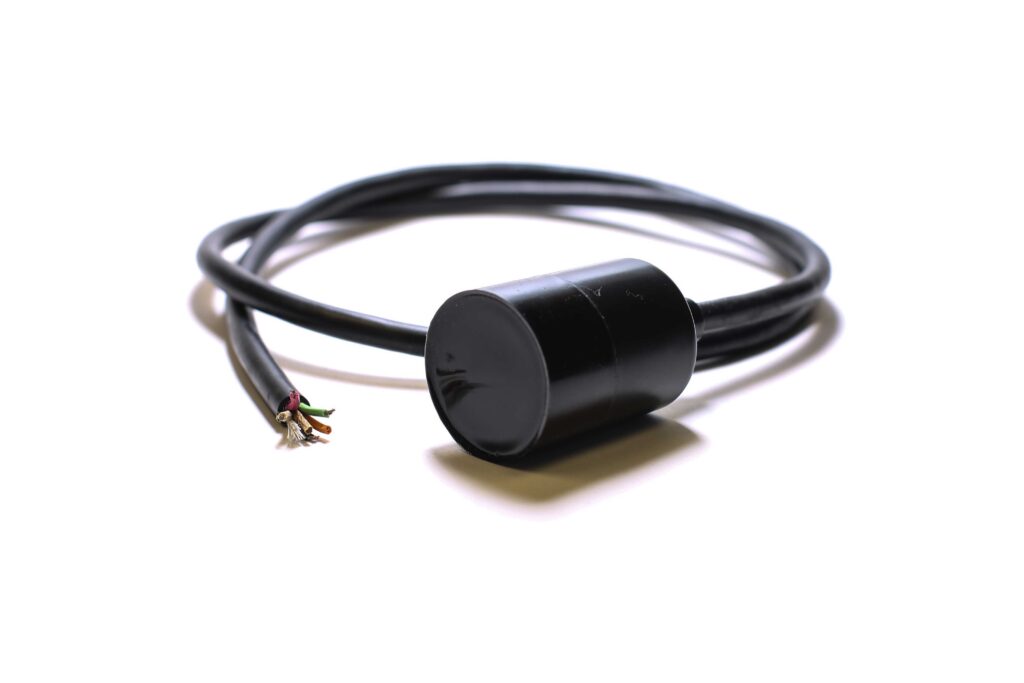
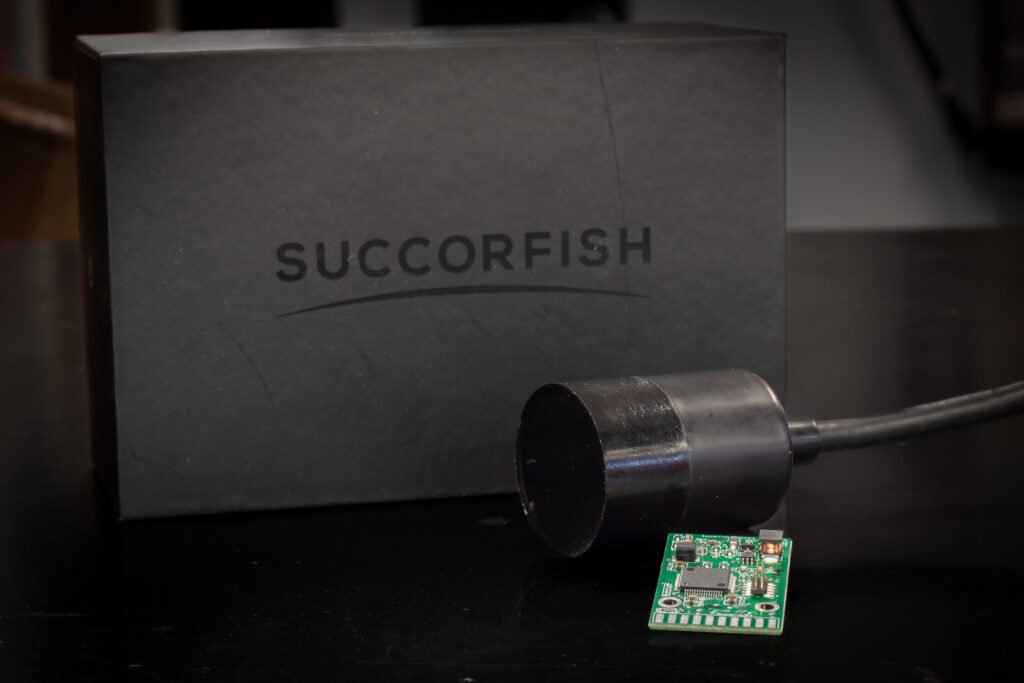
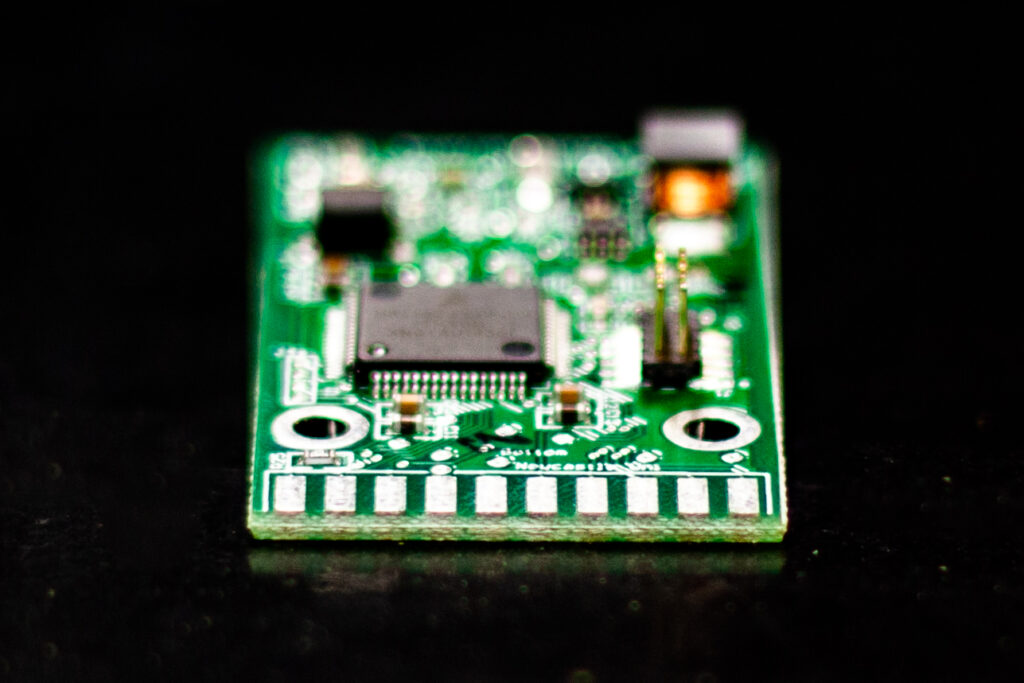
Seabed to space connected.
KEY FEATURES
- Range: 2 km in sea water and 3.5 km in fresh water
- Depth rating: 1000+ meters
- Addressing: Connect up to 256 uniquely addressable units
- Ranging Precision: sub-meter, ~10cm
- Data Packet Size: 64-Byte Data Packet Transmission
- Data Rate: 640 bits/s raw / 463 bits/s throughput
- Frequency Range: 24–32 kHz
Delphis is a High-Performance Acoustic Modem Transponder
- Newcastle University Collaboration – developed by Succorfish in collaboration with Newcastle University School of Electrical and Electronic Engineering this miniature acoustic modem and transponder is at the cutting edge of subsea technology and is used by research institutes worldwide for a variety of underwater applications.
- Reliable Subsea Data Transfer – with the Succorfish Delphis, users can reliably and accurately send between subsea and surface technology or other subsea Delphis units with a range of up to 2 km in sea water, 3.5 km in fresh water
- Minimal Ecological Impact – low-intensity, short-burst technology with extremely low duty cycle, has been engineered to minimise interference with marine wildlife.
- Connectivity – Scalable Subsea Networks, connect your entire subsea infrastructure with acoustic modem networks that scale from point-to-point links to resilient mesh and treeline topology, enabling full IoUT deployment.
- Low Power – Delphis’ low power design supports long-life deployments, making it an ideal building block for Internet of Underwater Things (IoUT) applications.
- Easy Integration – RS232 serial command protocol or a logic-level UART interface enables easy integration with other microprocessors. Speak to us about integrating Delphis into your own products and systems.
- Signal Performance – the latest hardware revision features reduced receiver self-noise, which increases the signal to noise ratio (SNR) and range in low to moderate sea states.
- Reliable Power Supply – reverse polarity and switching transient protection prevents damage from voltage spikes and power supply issues.
- V2 Enclosure – new further optimised enclosure ensures maximum range and reliable data transfer in any underwater environment.
An Acoustic Modem with minimal ecological impact on marine wildlife
Low noise, short burst, friendly frequency.
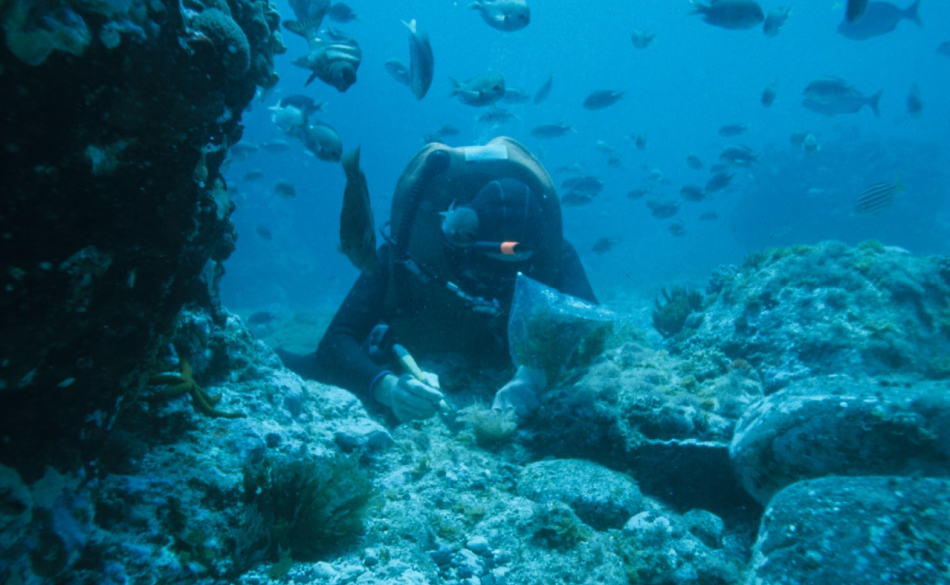
Marine wildlife is extremely sensitive to subsea noise because of its reliance on sound for communication, foraging and navigating.
We have worked with Newcastle University, to engineer the Delphis to minimise ecological impact on marine wildlife. It uses low-intensity, extremely short acoustic pulses that last 100 milliseconds at a frequency between 24-32 kHz and a source level of ~168 dB re 1µPa at 1m. The short burst technology means total acoustic energy output is extremely low, making data transmission effectively undetectable to nearby wildlife or divers.
Delphis as part of your Subsea Technology Solution
At Succorfish we work with you on the integration and software development needed to deploy the Delphis in your subsea application. Our capabilities include:
- SaaS Platforms – expertly architected cloud-based platforms that are secure and high performing
- Mobile Apps – experienced UI/UX team can design and build intuitive mobile apps tailored to your use case
- Backend Systems – supporting real-time data processing and high availability
- Embedded Firmware – custom firmware for data acquisition, device communication, and control
Our dedicated in-house team offers a full end-to-end solution — from firmware and software engineering to deployment — and has worked with many customers to build systems around their unique subsea or offshore requirements.
OEM Option — integrate the Delphis electronics into your own product. Speak to us about custom builds and enclosures.
Supporting Research and Innovation Worldwide
Developed alongside Newcastle University, Delphis is now deployed across more than 20 universities and research organisations globally; across the UK, Europe, North America, and the Asia-Pacific region.
Within research and education, the technology supports:
- Advanced ROV and AUV development
- Testing of autonomous and AI-driven marine systems
- Long-term environmental and oceanographic monitoring
- Practical student training using professional-grade equipment
Its growing adoption is helping establish a new benchmark for underwater communication technology across both research and commercial sectors.
Researchers working in marine robotics, environmental science, and offshore engineering rely on Delphis to deliver consistent subsea data in real-world conditions, helping bridge the gap between laboratory development and operational deployment.
Acoustic Modem Applications
The Delphis underwater acoustic modem supports a broad range of marine and offshore applications.
ROV and AUV Communication
The Delphis acoustic modem provides dependable telemetry and communication in deep-water and GPS-denied environments.
Underwater Positioning
The Delphis uses acoustic signalling to deliver accurate underwater positioning where satellite navigation is unavailable.
Subsea Data Transfer
The Delphis enables wireless communication between subsea assets and surface systems without the need for extensive cabling.
Offshore Energy Monitoring
The Delphis supports the monitoring of subsea pipelines, offshore wind infrastructure, and underwater equipment.
Oceanographic Research
The Delphis allows long-range environmental monitoring and real-time subsea data collection.
Defence and Security
The Delphis acoustic modem supports secure underwater communication and subsea tracking operations.
Case Studies
MyGearTag: The World’s First Commercial Acoustic Fishing Gear Tag
Acoustic Modem in Use for AUV Comms
How the Delphis Acoustic Modem works
Developed in collaboration between Succorfish and Newcastle University, our acoustic modem is at the cutting edge of underwater communication technology:
- Each acoustic modem is uniquely identifiable.
- Inside each device, a modem converts the data into an electrical signal.
- A transducer converts the electrical signal into short burst sound waves, containing all the data.
- Acoustic coupling within the product enclosure allows this sound wave to be transmitted clearly underwater for a range of up to 2 km in sea water, 3.5 km in fresh water. This ensures data is transmitted reliably.
- Another acoustic modem device receives this sound pulse and converts back into electrical signal, which is then converted back into data.
Contact us about Delphis
Download our Apps on the Google Play and App Store

