Succorfish Completes Deep-Water Testing of Mygeartag in Gran Canaria
In March, the Succorfish team travelled to Gran Canaria to carry out a series of offshore trials, focused on Mygeartag testing at depth while progressing early-stage development of the company’s depth and temperature monitoring technology.
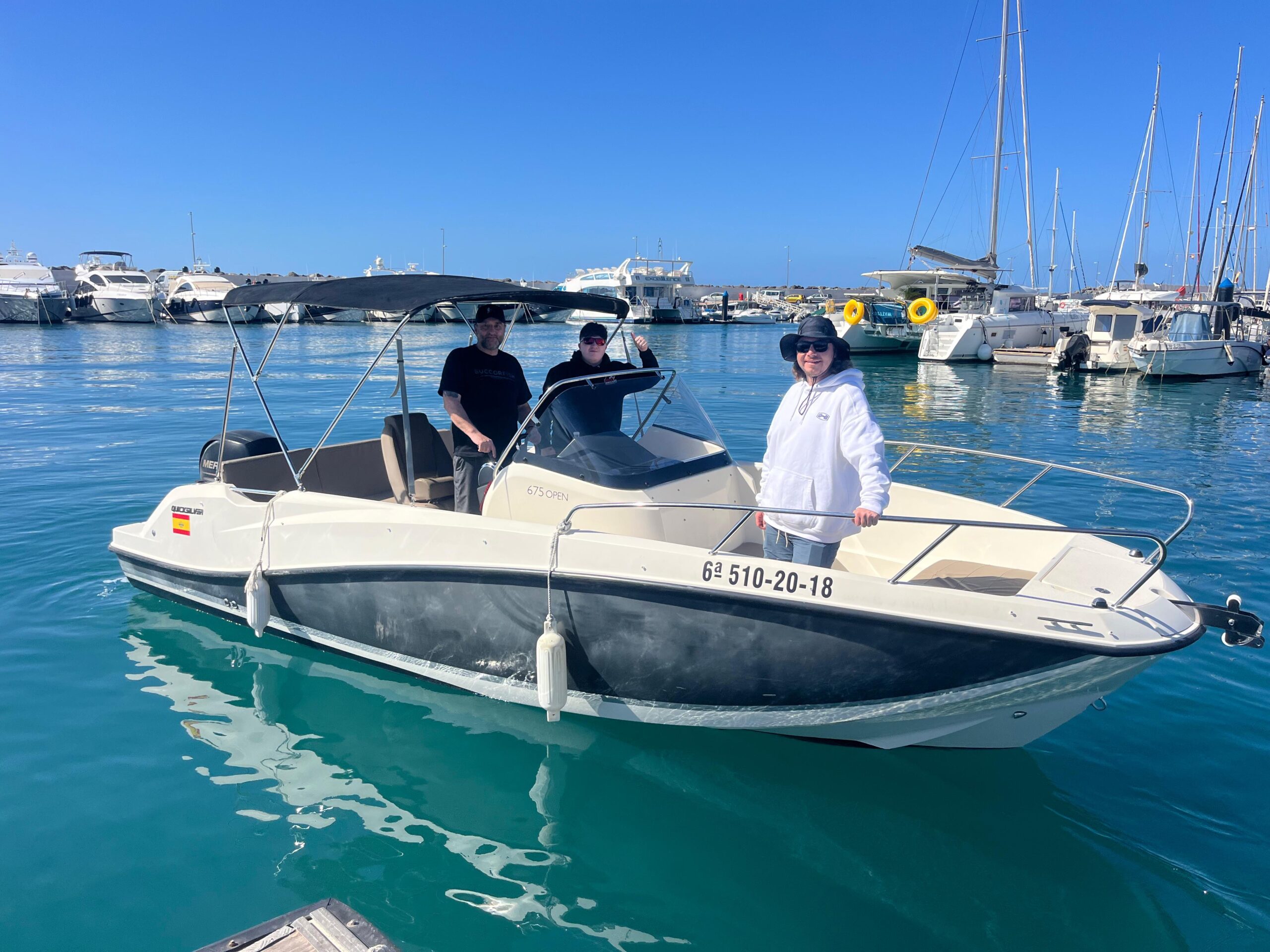
Operating out of Pasito Blanco, the team partnered with Isla Breeza to access suitable offshore conditions and a capable test vessel. The programme combined controlled calibration work with open-water deployment, allowing both verification and development activities to take place in a practical, real-world setting.
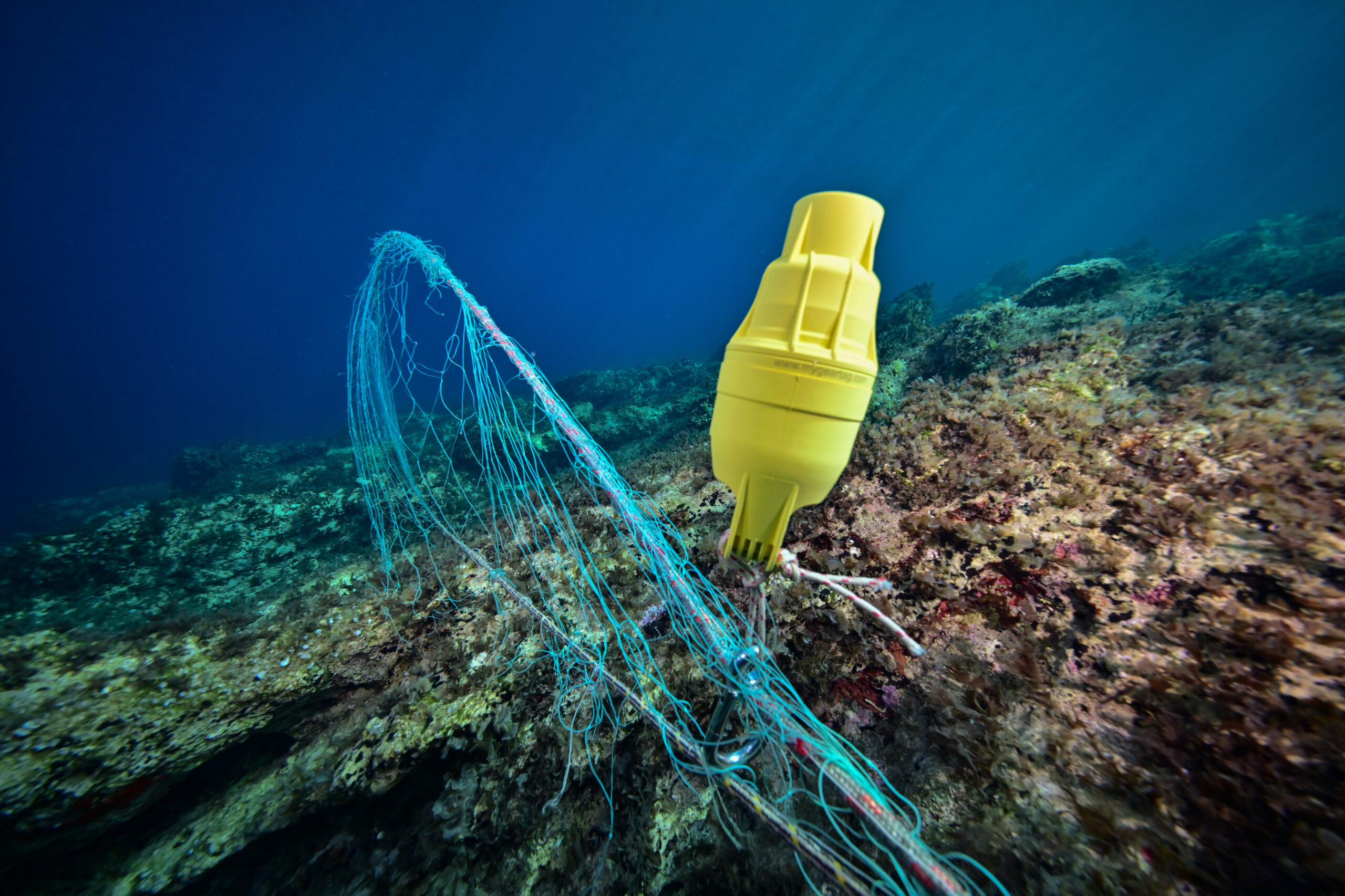
Mygeartag Testing to 350 Metres
A central objective of the trip was to carry out Mygeartag testing at significant depth outside of controlled conditions. Using the vessel’s onboard depth sounder as a reference point, the device was deployed offshore and monitored throughout its descent.
The Mygeartag reached 350 metres and performed consistently across multiple deployments. This depth is particularly relevant, reflecting the operating range commonly used by lobster fishermen in parts of Canada—one of the key applications for the technology.
During each deployment, the team maintained active communication with the device, successfully pinging the Mygeartag as it travelled through the water column. This demonstrated that communication could be sustained throughout the descent, not just at the surface, which is critical for reliable operation in working environments.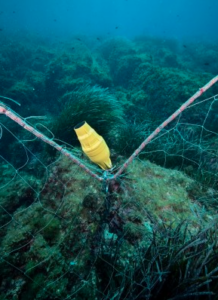
The focus here was verification rather than development—ensuring that performance in real conditions aligns with expectations. Across all tests, the device remained stable and responsive. The results from this round of Mygeartag testing provide confidence in its ability to operate in demanding offshore scenarios.
Why Depth Verification Matters
Understanding how equipment performs at depth is critical for many offshore operations, particularly in commercial fishing where gear is routinely deployed hundreds of metres below the surface.
For fisheries such as lobster fishing in Canada, depths of up to 350 metres are common. Technology used in these environments must not only reach those depths, but continue to operate reliably throughout deployment and retrieval.
Verifying Mygeartag under these conditions helps ensure that it can support day-to-day operations without interruption, providing confidence that communication and performance are maintained where it matters most.
This level of validation is particularly important when transitioning from controlled testing environments to real-world use, where consistency and reliability are essential.
Technologies such as Delphis by Succorfish demonstrate how low-power acoustic communication can be effectively deployed to support reliable underwater connectivity and sensing. This type of capability underpins consistent data exchange between subsea assets, particularly in environments where traditional communication methods are not viable.
Early Development of the Depth and Temperature Tag
Alongside this work, the trip supported early-stage development of Succorfish’s depth and temperature (D&T) tag.
Calibration was first carried out in a controlled environment, using the team’s hotel pool to establish a consistent baseline for both depth and temperature readings. This step ensured accuracy before moving into more variable offshore conditions.
The D&T tag incorporates a Keller sensor to provide precise depth and temperature data, forming the core of the device as development progresses.
Following calibration, the unit was deployed at sea and tested to depths of around 30 metres. These initial trials were designed to assess how the device performs outside of controlled conditions, with a focus on stability, accuracy and consistency.
Results were positive, with reliable readings recorded throughout testing. As an early-stage product, the trials provided useful insight into real-world behaviour and highlighted areas to refine as development continues.
First Live Testing of the App
The Gran Canaria trip also provided the first opportunity to test the supporting application in a live offshore environment.
While lab testing allows individual components to be validated, field use brings everything together. These trials enabled the team to observe how data from both devices was received, processed and displayed during active deployments.
Particular attention was given to how depth and temperature data appeared within the app, ensuring clarity, accuracy and usability. Performance was in line with expectations, with data presented correctly and the system responding reliably.
At the same time, the exercise helped identify small improvements that can be made as development continues—an expected and valuable outcome at this stage.
Connected Systems and Global Data Access
An important aspect of the depth and temperature solution is how it integrates within the wider Succorfish system.
The D&T tag connects to the Succorfish SC2 via Bluetooth, allowing collected data to be transferred directly between devices. The SC2 then enables transmission from virtually anywhere in the world using both GSM and Iridium satellite connectivity.
This setup allows depth and temperature data gathered at sea to be sent back to shore regardless of location, supporting remote monitoring across a wide range of operating environments.
The Value of Real-World Testing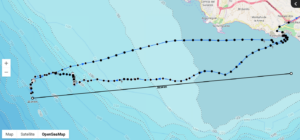
Testing in real conditions remains a key part of both verification and development. Controlled environments are essential for calibration, but offshore deployments introduce variables that cannot be fully replicated elsewhere.
Factors such as sea state, deployment methods and environmental conditions all influence performance. Conducting trials in these settings helps ensure that systems behave as expected when it matters most.
Using the vessel’s depth sounder alongside the deployed devices also provided a useful reference, supporting accuracy checks throughout the programme.
Mygeartag Testing Results and System Progress
The Gran Canaria trials represent an important milestone across both technologies.
For Mygeartag, successful operation at 350 metres confirms that the device performs as expected at depths relevant to commercial fishing activity. For the depth and temperature tag, early testing has demonstrated strong initial performance and provided a clear direction for further development.
Testing both devices alongside the application in a live environment has also been valuable in progressing the wider system.
Looking Ahead
With offshore testing complete, the focus now turns to the next stage.
Development of the depth and temperature tag will continue, including further calibration, refinement and extended depth trials. In parallel, additional verification opportunities for Mygeartag will help build on the confidence established during this programme.
Real-world testing will remain central to this process, ensuring that all systems are proven in the environments they are intended for.